


It can be quite concerning to see our dogs vigorously eating grass. Owners may worry not only about the effect of the grass itself but also about the possibility of parasites and toxins such as weed-killer and lawn feed.
Read on to find out why dogs like to eat grass, and whether it should be a cause for concern.
Why do dogs eat grass?
Well, there are various theories and no real consensus as of yet.
Some believe it is a trait they have inherited from their ancestors, who are thought to have eaten grass to ‘purge’ themselves of indigestible material in their stomach as well as parasites.
Others argue it is all fun and games, and dogs enjoy pulling out the long stems, seeing it as entertainment to pass the time. They find their dog is more prone to grass-eating when left alone for long periods in their garden.
There is a theory that a number of dogs find the grass tasty, particularly in the spring and summer months when the new grass is fresh and full of simple sugars.
Those on low fibre diets may potentially eat grass to help bulk up their diet in a natural way.
Another suggestion is that those with stomach and digestive issues will eat grass to help deal with the feeling of acid in their stomach and to throw up excess bile.
The true reason is likely a combination of all of the above and, for most, grass-eating is an occasional hobby that doesn’t cause any problems. It is important to ensure the grass has not been recently treated with any toxic products and that dogs are up to date with their parasite prevention.
Eating grass and your dog's gut microbiome
As we've mentioned, one reason that is believed to drive dogs to eat grass is issues with their digestion and their gut. This could highlight a link to their gut health and thus, the health of their gut microbiome . The gut microbiome is a microscopic ecosystem of bacteria that lives within your dog's gut.
In a healthy microbiome, these bacteria are of varying species, but are in equal proportion to each other, and work hard to support the function and strength of key processes within the body.
This includes, but isn't limited to, digestion, overall gut health, immunity, behaviour , joint health and skin and coat health .
When the balance of bacteria is knocked, however, in other words, suffering from dysbiosis, the bacteria are unable to support these processes, and the working order of your dog's body is disrupted. Indicating dysbiosis in dogs is done so via a Gut Health Test .


Gut Health Test
Get your results in 4 weeks, with our quick and easy, at-home Gut Health Test for dogs. One simple poo sample, analysed by our microbiologists, and you’ll get personalised recommendations to help your dog thrive.
*This item is excluded from all discount codes.
-
Science backed gut health insights
-
Online report including key health indicators
-
81% saw an improvement in their dog's health
Current price: £69.99
Gut Health Test
Things like fibre deficiency, poor digestion, or an imbalance in their microbiome can all lead dogs to eat grass more compulsively.
This is especially the case as some of the bacteria within their gut microbiome feed off the fibre and other nutrients found in grass, so they send signals to the rest of the dog's body, including the brain, to stock up on grass. That way, the bacteria get fed and can thrive within the gut microbiome.
When it could be a cause for concern
If grass eating becomes excessive or is accompanied with other signs such as refusal to eat, chronic vomiting or weight loss we would need to look into things as there may be a gastrointestinal problem.
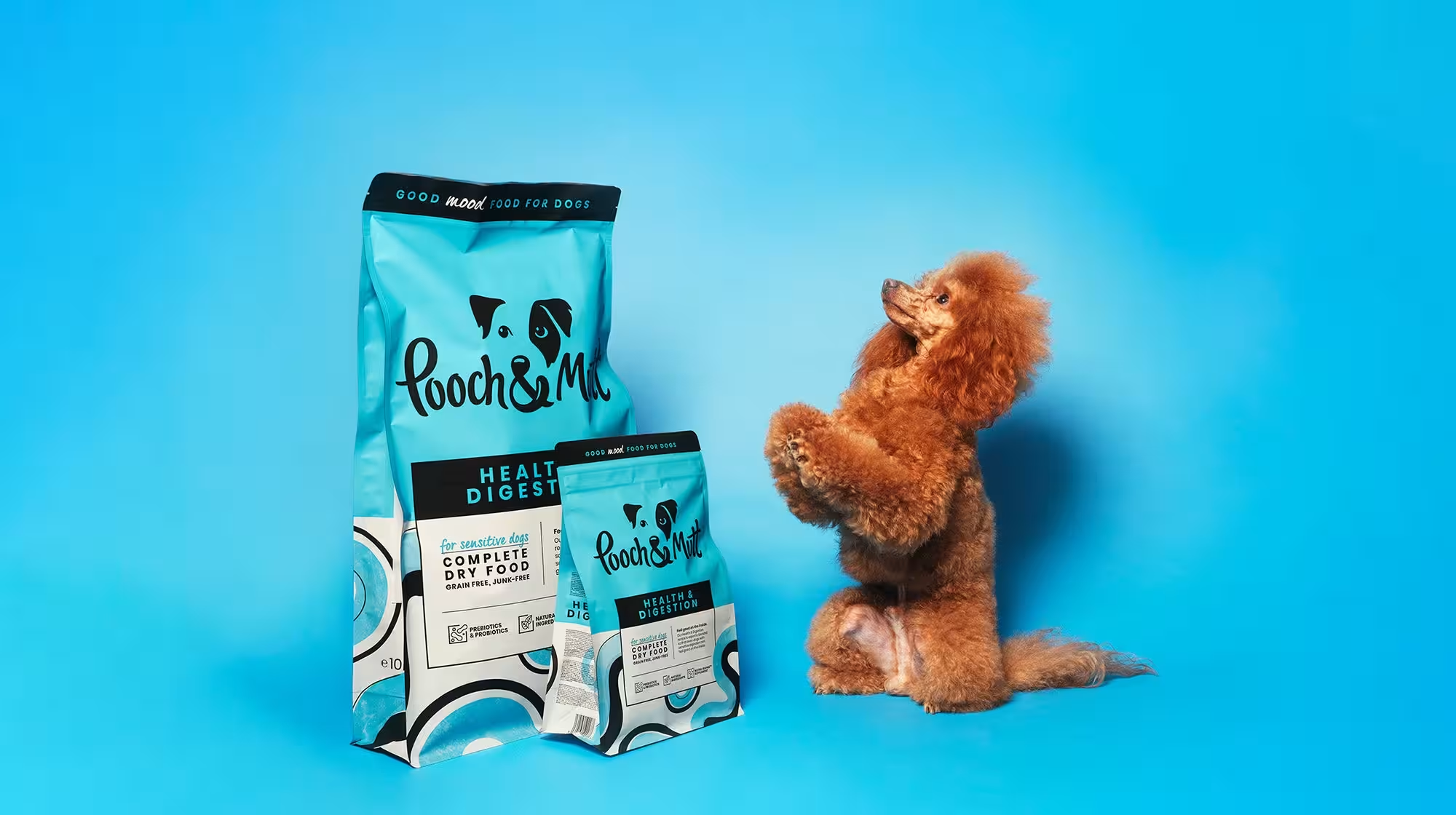
If your dog does have a sensitive stomach and you feel a change in food is worth a try, we recommend feeding balanced and nutritious dog food such as sensitive stomach dog food . All products within this range are carefully selected to be easier on your dog's gut.
Sensitive Stomachs
-

 from
fromCurrent price: £1.99
Health & Digestion Complete Wet Food -

 from
fromCurrent price: £8.49
Health & Digestion Dry Food -

 from
fromCurrent price: £2.49
Fish, Potato & Pea Wet Food -

 from
fromCurrent price: £64.99
The Health & Digestion Bundle -

 from
fromCurrent price: £19.99
Gastrointestinal Dry Dog Food -

 from
fromCurrent price: £5.99
Health & Digestion Bone Broth -

 from
fromCurrent price: £3.99
Health & Digestion Probiotic Fish Treats -

 from
fromCurrent price: £3.99
Dental Probiotic Meaty Treats -

 from
fromCurrent price: £3.99
Cheddar Cheese Probiotic Treats