


Key Takeaways:
- Probiotics are extra ‘friendly’ bacteria - the kind that promote a harmonious gut environment, enable proper digestion, inhibit the growth of ‘bad’ bacteria and boost your dog’s immune system.
- When fed to your dog, probiotics are digested, broken down and released as healthy bacteria into your dog’s gut and intestinal tract. They restore the balance of ‘good’ bacteria in your dog’s digestive system.
- Probiotics help towards a healthy gut, and all the health benefits that brings - helping them stay healthy, top to tail.
As advocates for dog gut health, we at Pooch & Mutt are always flying the flag for probiotics and the endless health benefits and perks they’re responsible for. But what are probiotics for dogs? We know it all sounds very scientific, but put simply, they contribute to a healthy dog gut. For what that entails, as well as how to get more probiotics into your dog’s diet, read on for our full guide to probiotics for dogs.
What are probiotics for dogs?
Within your dog's gut, you'll find millions of bacteria, both troublesome and ‘friendly’, that inhabit and grow in your dog’s stomach and digestive tract. Essentially, probiotics are extra ‘friendly’ bacteria - the kind that promote a harmonious gut environment, enable proper digestion, inhibit the growth of ‘bad’ bacteria and boost your dog’s immune system.
Though dogs can have ‘good’ bacteria on their own, there are some scenarios that can disrupt or imbalance the delicate ecosystem of the gut (their microbiome) - a course of antibiotics, a bout of diarrhoea or ingesting some off food, for instance - that will warrant a boost of probiotics to help restore the balance and get your dog back to optimum health.
In these cases, you can feed your dog probiotics through natural sources such as banana, or through dog digestive supplements.
How do probiotics work for dogs?
When probiotics are fed to your dog either as food or supplements, they are digested, broken down and released as healthy bacteria into your dog’s gut and intestinal tract.
From here, they will restore the balance of ‘good’ bacteria in your dog’s digestive system while also contributing to the breakdown and release of other helpful nutrients, vitamins and minerals that come through in the food your dog eats (1).
Where possible, probiotics feed on prebiotics in order to thrive and work at their best (2).
What are the benefits of probiotics for dogs?
The main health benefit of probiotics is very simple - they contribute to a healthy gut. And with gut health being linked to so many areas of the body, a healthy gut also means an all-around healthier and happier dog.
For example, when probiotics help break down food in the gut, they release the nutrients, vitamins and minerals linked to all kinds of health benefits.
If they didn’t, these nutrient-rich foods would just come out as poop, with all the goodness wasted.
So, by ensuring your dog has a happy tum, you’re also ensuring they have:
A soft, shiny coat
Healthy skin
Sparkling eyes
More pleasant-smelling breath
Higher energy levels and alertness
Less stinky farts
A boosted immune system
An improved central nervous system
Healthier and more regular bowel movements
Even reduced anxiety and an overall sense of calm.
Dog gut health and the ‘gut-brain axis’
It’s true - a healthy gut has even been proven to directly affect your dog’s mental and emotional health. Often called the ‘gut-brain axis’, this refers to the concept that what goes on in the gut and gastrointestinal tract is directly linked to the brain, and vice versa - therefore having an influence on mood and behaviour (3) (4). With this in mind, using probiotics to bring harmony in the gut is a great way to reduce anxiety in dogs, promoting a physical sense of calm and wellbeing.
How do you know if your dog needs probiotics?
If we take a look at the list of what a healthy gut can ensure for your dog, we can get an idea of what kind of symptoms could arise if their gut health needed a little more attention. With the health of their gut having implications on so many areas of their body, an unhealthy gut can also cause adverse effects in these areas.
Including:
Varying stool consistencies, from runny to too hard
Itchy skin and hair loss
Worsened allergy symptoms
Foul-smelling farts
Weight gain, weight loss and loss of appetite
Worsened oral health, including bad breath
Changes in behaviour, including nervousness, anxiety and reactivity
If your dog is experiencing any of the above symptoms, it may be telling you that their gut health is in need of some attention, and probiotics could be what they need to alleviate these pesky symptoms.
However, these symptoms can also be signs of other medical conditions. So, if symptoms are long-term and persistent, be sure to check in with your vet.
If your dog gets the all clear from the vet and the symptoms STILL don't seem to be going away, the next step is a Gut Health Test. This is the best and easiest way to determine the health of your dog's gut and whether they would truly benefit from probiotics and overall gut intervention.
To find out more about Gut Health science at Pooch & Mutt, follow the link below.
Canine stress and upset stomachs
In the reverse, it’s been proven that distressed or anxious dogs will often have stomach upsets as a symptom of panic (it applies to humans, too). One study revealed that probiotics can also help speed up recovery if your pup is suffering from a bout of diarrhoea.
So, as a preventative measure, feeding your dog probiotics in anticipation of a stressful event - such as a veterinary procedure, a house move or a big celebration, for instance - can be a way to get ahead of your dog’s stress and help them remain calm before tummy issues occur.
What are the side effects of probiotics for dogs?
When you start your dog on a probiotic-infused diet, they might, ironically, experience some digestive issues such as diarrhoea, gas, bloating or constipation.
This is usually a sign of dietary change and should get better quite quickly - but if it doesn’t improve, or if your dog experiences any changes in appetite after consuming probiotics, stop feeding them the probiotic food/supplement and discuss with your vet.
How to get probiotics into my dog’s diet
Probiotics are easy to administer as they’re available in a number of tasty formats, including natural food sources, specialist doggy treats and probiotic health supplements for dogs.
The thing is, there’s a ton of different strains of probiotics, with each one suited to various health issues, from gassiness to diarrhoea and allergies (5) (6).
What dog treats have probiotics?
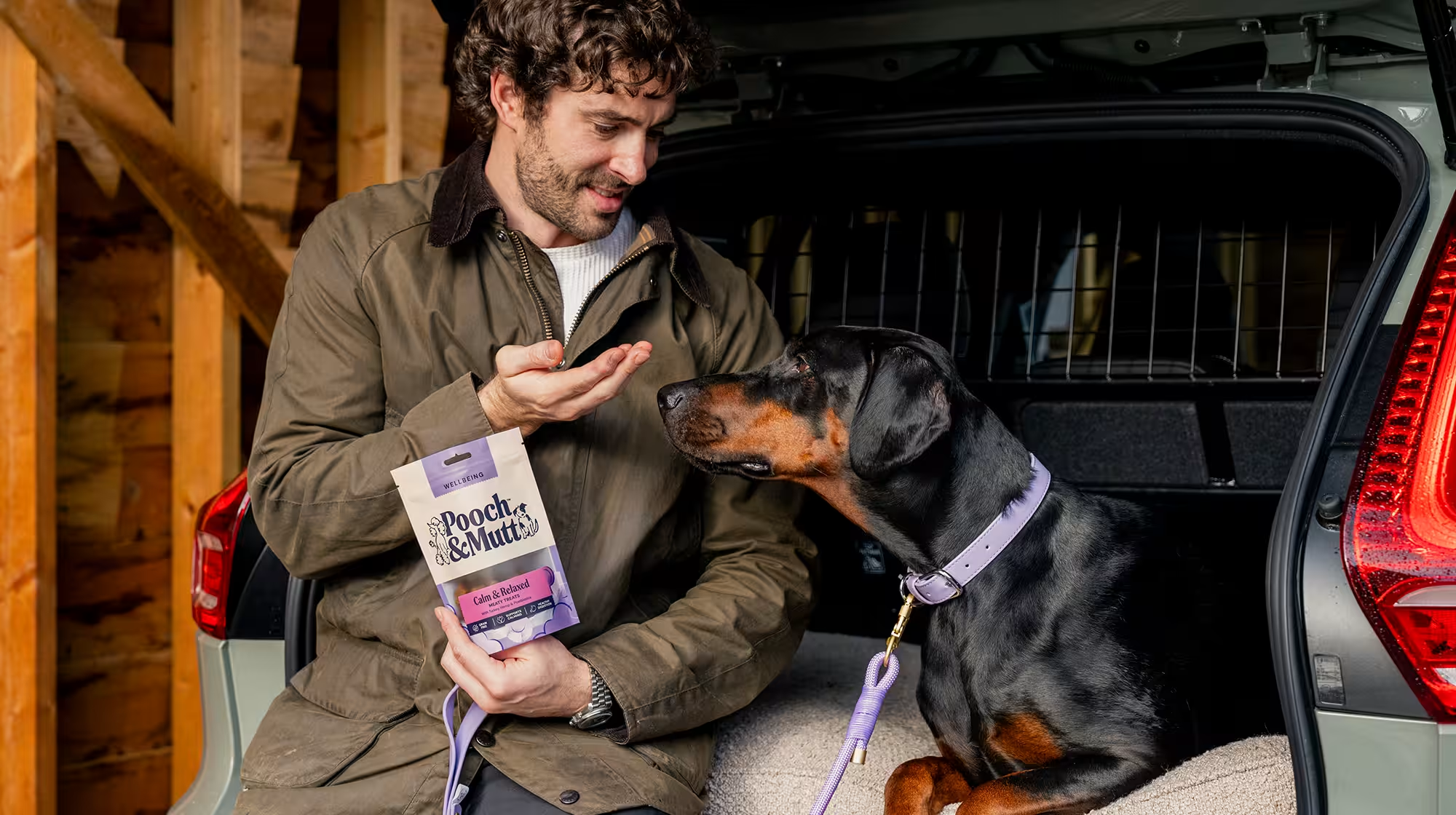
Many probiotic dog treats will be packed full of probiotics that promote overall gut balance in dogs as well as aid digestive issues, while others will focus on specific health concerns. At Pooch & Mutt we’ve created three delicious probiotic dog treats that are meaty and nutritionally powerful.
Shrimp & Coconut - A flavoursome, Thai-inspired treat that promotes a healthy skin and coat for your dog.
Turkey & Hemp - With hemp, L-tryptophan and Valerian root to help anxious dogs to relax and unwind.
Duck & Rosemary - A traditional flavour combo packed with ingredients to balance the gut and improve dental health.
Probiotic supplements for dogs
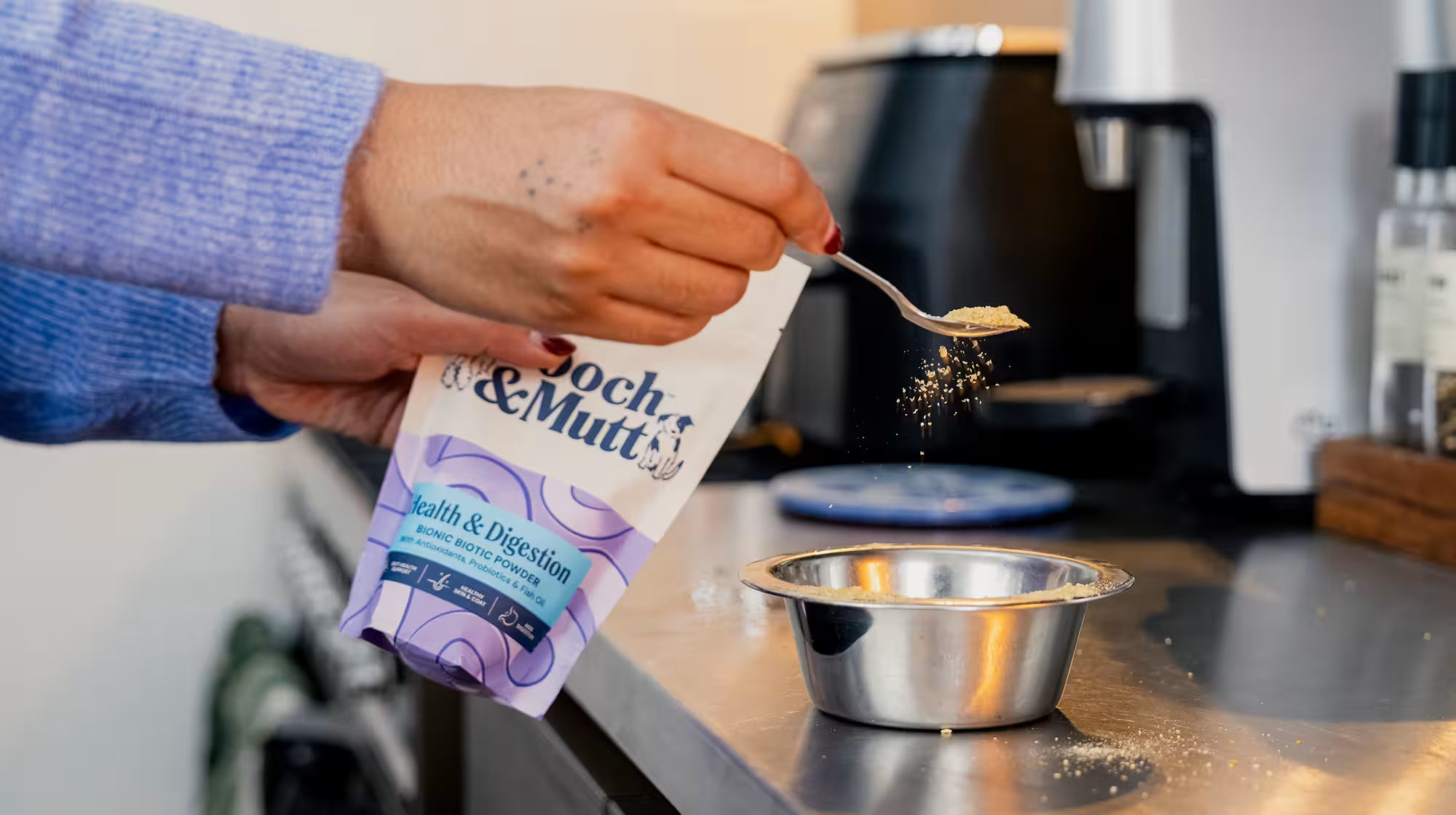
As mentioned, most probiotic dog supplements will likely prove a reliable all-rounder for your dog’s gut and digestive health, and contain a smorgasbord of probiotic power. Pooch & Mutt’s Bionic Biotic is a great option, as it’s packed with natural ingredients to promote solid stools as well as healthy digestion, skin and coat.
After conducting a Gut Health Test with Pooch & Mutt, we will recommend a completely tailored and science-backed supplement plan that will help target pesky symptoms and help get their gut back on track. From gut health supplements to target joints, immunity and skin issues, the power of pre, pro and postbiotics can help restore balance and make for one happy and healthy dog.


Gut Health Test
Get your results in 4 weeks, with our quick and easy, at-home Gut Health Test for dogs. One simple poo sample, analysed by our microbiologists, and you’ll get personalised recommendations to help your dog thrive.
*Discount codes can't be redeemed on this item.
-
91% of customers saw improved gut health
-
Science backed gut health insights
-
Online report including key health indicators
Current price: £48.99
Original price: £69.99
Gut Health Test
Are human probiotics good for dogs?
Some probiotic-packed human foods can be fed to dogs - such as pickled foods like sauerkraut. When it comes to supplements however, it’s best to stick to canine alternatives. This is because they’re more likely to contain the Enterococcus Faecium strain of probiotics, which is better suited to dog health (by the way, our Bionic Biotic contains these).
Natural probiotics for dogs
Lots of natural food sources contain probiotics - such as sauerkraut (mentioned above), cottage cheese, kefir, broccoli, banana and sweet potato. These can be safely fed daily to your dog to boost their probiotic intake.
Be aware that if your dog eats lots of these foods, they may be getting enough probiotics in their diet already and will have no need for supplements. Though getting more probiotics is unlikely to cause any harm, keep an eye on your pooch’s behaviour, feeding and toilet habits during any period of dietary change.
Get your dog a health-packed boost of probiotics with our natural probiotic supplements, meaty probiotic treats, or range of dog foods to aid digestion. To discuss any further nutritional issues regarding your dog, get in touch with us at Pooch & Mutt.
This post was originally published in October 2022, but has been updated for comprehensiveness.


What a very helpful and informative article, thank you so much.
This has been informative. How can probiotics help with constant yeast/mite population in her ears? We've cleared it up but now, pregnant, the mites are back. Thoughts? Facts? With thanks, Kristina
Hi I have tried several probiotics and they don’t seem to make a difference. Lilly has dreadful gut problems. Scratching and licking being the worst. Because she has dry food I need something other than powder but I’m going to try her in yoghurt and see how she goes. Any thoughts please.
Hi Judi, You can absolutely try the yoghurt and see how she gets on with this. You can also look at adding salmon oil to the dry food, before adding any powder supplements and this can help the powder stick to the dry food easier. :)
We do canned pumpkin 100% pumpkin, (not pie filling) fresh boiled or baked sweet potato,and some drained sauerkraut trying to get some salt out of it. We do salmon oil daily on all 3 dogs. All in small amounts.
Hi, my 2yr old border collie has had gut issues since a puppy. Now leading to behaviour problems. I often give him natural yogurt or keif on his biscuits. Also likes a bit of banana. Have tried a couple of prebiotic, with some success. Would like to keep things as natural as possible. His main diet is fish based, but can have small amounts of other meat. Any other ideas are appreciated. Thanks